
Driveway Pressure Washing in Tuscaloosa: What Homeowners Should Know
Concrete driveways take a beating in Tuscaloosa. Humid summers, heavy rain, clay tracked in from the yard, and the slow drip of oil from a parked car all work on that slab, and the surface turns dull long before the house does. Driveway pressure washing is one of the fastest ways to bring it back, but it is also one of the easiest exterior cleaning jobs to get wrong. Too much pressure scars concrete, and sloppy technique leaves stripes that are visible from the street. Here is a clear look at what the work involves, what it costs, and how to decide between renting a machine and calling a local crew.
Why Tuscaloosa Driveways Stain So Quickly
Alabama humidity gives algae and mildew a long growing season, and those growths settle into the porous surface of concrete rather than sitting on top of it. Add the usual driveway traffic of daily parking, lawn equipment, and foot traffic from a wet yard, and the soiling builds in layers. A quick rinse from a garden hose moves the loose grit but leaves the embedded dirt and the dark organic film behind.
That is why a driveway that was cleaned two or three years ago can look gray and tired again. The staining is not always on the surface. Some of it has worked into the pores, which is why pressure alone is not the whole answer and why pre-treatment matters as much as the machine.
What Professional Driveway Pressure Washing Involves
A proper job is more than pointing a wand at the slab. The order of steps, the equipment, and the pressure setting all affect the final result and how long it lasts.
Step One: Pre-Treating the Concrete
Cleaning solution goes down before the pressure comes out. Applied to the dry surface and given time to dwell, it breaks up the bond between the grime and the concrete so the machine can lift it away instead of chasing it around. Skipping this step is the most common reason a driveway comes out looking only partly better, with a bright patchwork rather than an even finish.
Step Two: A Surface Cleaner Instead of a Wand
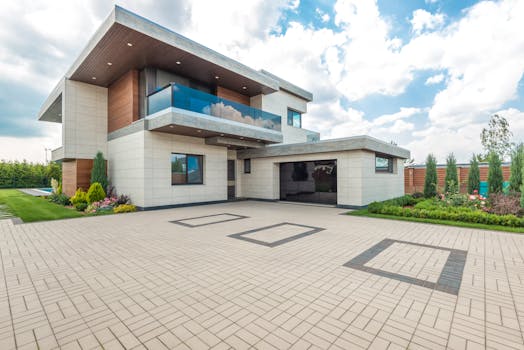
Contractors typically run a circular surface cleaner, a rotating attachment that rides above the slab and sprays from several angles at once. You can see the difference in how a large concrete driveway and front walkway are handled in professional demonstrations. The attachment covers ground quickly and keeps the spray pattern consistent, which is what prevents the zebra stripes that a handheld wand leaves when the operator moves too fast or overlaps unevenly.
Wands still have a role. They handle edges, expansion joints, and the tight strip along the garage door where a surface cleaner cannot reach. Those areas are usually touched up by hand after the main pass.
Step Three: Respecting the Pressure Limit
Concrete is tough, but it is not indestructible. Guidance for concrete driveways calls for a pressure washer of 3,000 PSI or less, because a more powerful machine can etch or crack the surface. Etching shows up as a rough, chalky patch that holds dirt even faster once the top layer is compromised. On a driveway, the goal is cleaning, not stripping.
On the equipment side, driveway work generally calls for a machine with at least 2,500 PSI and 2.5 GPM to cut through oil stains, embedded dirt, and algae. That overlap between roughly 2,500 and 3,000 PSI is the useful working range for most residential concrete.
Step Four: Rinsing and Checking the Result
The loosened slurry has to be rinsed away, and the slab should be walked once dry to catch anything missed. Fresh oil stains sometimes need a second, targeted pass. Clean edges along the garage apron and the street cut are what make the finished driveway read as clean from the curb rather than just lighter in the middle.
DIY or Hire a Crew?
Renting or buying a machine is a legitimate option for a small, lightly soiled driveway. It becomes a harder call on a large slab, on concrete with years of buildup, or on a home where the driveway is visible from the road and the margin for error is thin. The table below lays out the practical differences.
| Factor | Doing It Yourself | Hiring a Local Crew |
|---|---|---|
| Equipment | You need a machine in the 2,500 PSI and 2.5 GPM range for oil, embedded dirt, and algae, plus a surface cleaner sold separately from most wands | Commercial machines and rotating surface cleaners arrive with the crew |
| Pressure control | Easy to overshoot. Concrete should stay at 3,000 PSI or less to avoid etching or cracking | Settings matched to the surface, with edges and joints handled by hand |
| Setup and cleanup | Hose connections, water supply, chemical application, and runoff all fall to you | Handled on site, including pre-treatment and rinse |
A first-time DIY attempt on a heavily stained driveway often ends with a streaked result and a weekend gone. The equipment rental or purchase plus cleaning chemicals can also close part of the gap with a professional quote, which is why many homeowners get an estimate before deciding.
What Driveway Pressure Washing Typically Costs
National cost data puts driveway pressure washing in the range of $100 to $350 on average, with the final figure driven by the size of the driveway and the material it is made of. That is a broad range, and local pricing in Tuscaloosa County will depend on square footage, how much buildup is present, and whether the job includes walkways, curbs, or a patio at the same time.
Treat published averages as a starting point, not a quote. The only reliable number is one based on your actual driveway. Ask for an estimate that states what is included: pre-treatment, surface cleaning, edge work, rinsing, and any post-treatment for algae or mildew. A price that covers only a quick pass with a wand is not the same service as a full cleaning.
Not Every Surface Wants Full Pressure
Concrete driveways handle pressure well within the limits above. Other surfaces around the same property do not. Decorative pavers, stamped concrete, wood, and painted surfaces can be damaged by a narrow, high-pressure stream, and joints and sealant can be blown out. That is why exterior cleaning companies separate pressure washing from soft washing, which relies on cleaning solution and low pressure rather than force.
If your driveway connects to a paver walkway, a wooden fence, or a painted garage door, ask how those edges will be handled before the work starts. A crew that knows the difference will adjust the method rather than treating the entire property the same way.
How to Prepare for Service Day
The prep is simple. Move vehicles, trailers, and basketball goals off the driveway and out of the way, and clear small items like toys, mats, and planters. Close windows facing the driveway, and expect that overspray and mist are normal parts of the process.
Plan on staying off the concrete until it dries, and ask whether any post-treatment needs time to work before the surface is walked on or parked on again. If you have pets, keep them indoors while equipment is running. Point out problem areas in advance, particularly oil spots, rust marks, and any cracked or spalled sections, so the crew can adjust and you can hear what is realistic to expect.
Mistakes That Damage Concrete
Most driveway damage comes from a handful of avoidable errors. Running a machine above the safe limit for concrete can etch or crack the slab. Holding a wand in one spot creates a visible gouge that never quite blends in. Working without pre-treatment pushes dirt around instead of removing it. Cleaning in direct sun on a hot day can dry the cleaning solution before it works, and uneven passes leave stripes.
There is also the matter of what the runoff carries. Cleaning chemicals, oil residue, and dirty water need to go somewhere sensible rather than straight into a storm drain or a neighbor's yard. A professional crew plans for that as part of the job.
Questions Worth Asking Before You Book
A short conversation before the appointment tells you a lot. Ask what pressure range will be used on the concrete, whether a surface cleaner is part of the setup, and whether pre-treatment is included in the quoted price. Ask about insurance and about how long the crew expects the job to take.
It is also fair to ask what happens if a stain does not come out. Old oil that has soaked deep into concrete may lighten considerably without disappearing entirely, and a company that says so up front is being honest about the limits of the process. Alabama Pro Wash has served Tuscaloosa and surrounding communities since 2009, and locally owned, insured crews generally welcome these questions.
Frequently Asked Questions
How much does driveway pressure washing cost?
Published national averages run from about $100 to $350, depending on the size of the driveway and the material. Local quotes vary with square footage, how much buildup is present, and whether walkways or other concrete areas are included. Get an estimate based on your actual driveway rather than relying on an average.
Can pressure washing damage my concrete driveway?
It can if the pressure is too high. Guidance for concrete driveways calls for a machine of 3,000 PSI or less, since anything stronger may etch or crack the surface. Damage also comes from holding a wand in one place or skipping pre-treatment. A surface cleaner and controlled pressure protect the slab.
How much pressure does a driveway actually need?
For cutting through oil stains, embedded dirt, and algae, a pressure washer with at least 2,500 PSI and 2.5 GPM is the usual recommendation. On concrete, keep the working pressure at or below 3,000 PSI. That range gives enough cleaning power without risking the surface.
Can I just use a regular wand instead of a surface cleaner?
A wand works for edges, expansion joints, and tight spots along the garage, but it is a poor choice for the main slab. Handheld passes tend to leave stripes where the spray overlaps unevenly. A rotating surface cleaner covers the driveway faster and produces a more even finish across the whole surface.
How often should a driveway be cleaned?
There is no fixed schedule, since it depends on shade, tree cover, drainage, and how much the driveway is used. In a humid climate where algae and mildew grow readily, many homeowners notice the concrete dulling and darkening within a few years. Clean when the surface looks tired rather than waiting for a set interval.

