
Pressure Washing the Driveway: How Often Alabama Homes Need It
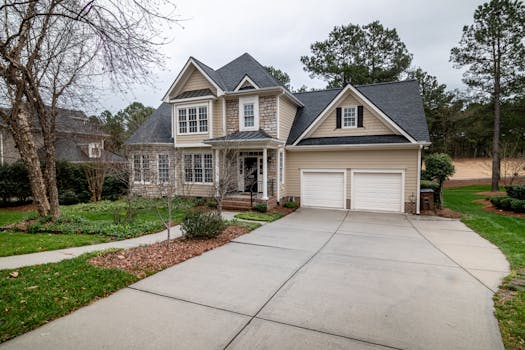
A concrete driveway is the largest flat surface most Tuscaloosa County homeowners own, and it is also the surface that shows neglect first. Tire tracks, red dust, pollen, and a green film along the shady edge all build up quietly until one day the slab looks ten years older than the house. Pressure washing the driveway resets that clock, but the timing matters as much as the method. Clean too rarely and stains set in. Clean carelessly and you can scar the concrete. Here is a practical way to think about frequency, plus what a proper cleaning actually involves.
Why Driveways Around Tuscaloosa Dirty Up So Fast
Alabama humidity does most of the work. Concrete stays damp for long stretches, and damp concrete is a welcome mat for algae and mildew. Those organisms are what turn a clean gray slab into something streaked with green and black. The effect is strongest on driveways that sit under tree canopy, on the north side of a house, or anywhere water pools after a storm and lingers.
Add the everyday traffic. Vehicles drop oil and transmission fluid. Tires grind dirt into the surface. Lawn equipment drags clippings and soil across the apron. Because concrete is porous, much of that material works its way below the top layer instead of rinsing away with the next rain. The longer it sits, the deeper it goes, and the more pressure and dwell time a cleaning crew needs to lift it back out.
How Often Alabama Homes Need Pressure Washing on the Driveway
For most homes in the Tuscaloosa area, one thorough driveway cleaning a year is a sensible baseline. That schedule keeps organic growth from establishing a permanent foothold and stops oil and dirt from settling into the pores. Homes with heavy shade, nearby pines, or a driveway that stays wet after rain often need attention twice a year to stay ahead of the green film.
Three situations justify going beyond the annual routine:
- The driveway is a focal point from the street, and curb appeal matters for a sale, an appraisal, or a neighborhood standard.
- The slab has visible algae or mildew growth that returns within weeks of a cleaning.
- Oil, rust, or fertilizer stains have appeared and should be treated before they cure into the surface.
The honest answer is that frequency should follow condition, not a calendar. Walk your driveway after a dry stretch and look at it in low afternoon light. If the concrete reads gray and even, you can wait. If it reads green, black, or noticeably darker in the traffic lanes, it is due.
Signs Your Driveway Is Due for a Cleaning
Most homeowners notice the problem long before they book anything. These are the usual triggers:
- A green or black film along edges, joints, and shaded sections.
- Dark tire tracks that no longer rinse away with a hose.
- Oil spots that have spread and collected grit.
- A slick feel underfoot when the slab is wet.
- A visible contrast between the clean border near the garage and the stained center.
- Dirt tracking into the garage or onto the entryway tile after every rain.
The Best Time of Year to Schedule Driveway Cleaning
Spring and early summer are the most popular window locally, and for good reason. Growth season is underway, so the algae and mildew are visible and worth removing, and the cleaning happens before summer entertaining season. A second pass in the fall clears pollen residue, leaf tannin, and the grime that accumulates over a humid summer.
If you can be flexible, pick a stretch of dry weather. Surfaces dry faster, and the driveway stays presentable longer instead of immediately collecting whatever the next storm drags in.
What a Proper Driveway Cleaning Looks Like
A driveway cleaning is a sequence, not a single pass with a wand. The standard professional approach starts with clearing debris and obstacles, then sweeping and wetting the surface so loosened material can be lifted rather than ground in. Choosing the correct nozzle comes next, followed by working the slab in consistent sections so the finish stays even, and finishing with a rinse that carries the dirty water away.
Equipment matters on concrete. For effective cleaning, a power washer should be rated at least 3000 psi with a flow rate of at least 4 gallons per minute. Pressure alone is not enough. A machine that hits the number but moves little water mostly pushes dirt around.
| Setting | Minimum | What it does |
|---|---|---|
| Pressure | 3000 psi | Breaks embedded dirt and organic growth loose from the concrete |
| Flow rate | 4 gpm | Carries the loosened material off the slab instead of redistributing it |

When a Pressure Washer Is Not the Right Tool
Not every driveway problem calls for a pressure washer. For light organic growth, some homeowners use a backpack sprayer loaded with a concentrate cleaner and let the product do the work instead of blasting the surface. That approach is gentle and useful for touch-ups between full cleanings, and it reaches edges and corners where a wand is awkward.
What it will not do is pull out years of ground-in dirt or lift a set oil stain. Chemical cleaning and mechanical cleaning solve different problems, and a driveway that has gone several seasons without attention usually needs the mechanical kind first.
Doing It Yourself vs. Booking a Local Crew
The DIY route is workable if you can get your hands on a machine that meets the 3000 psi and 4 gpm baseline. Rental units of that size are heavy, awkward to maneuver along a sloped drive, and demanding to run for the hour or more a full slab takes. Nozzle selection becomes your responsibility too, and the wrong tip in one spot on concrete leaves a permanent mark that no amount of cleaning will remove.
Hiring a local crew usually makes more sense when the driveway is large, the staining is heavy, or the slab has never been professionally cleaned. A crew arrives with commercial equipment, works the surface evenly, and handles the runoff. Compare that against a rental fee, a lost Saturday, and the risk of an uneven finish, and the math often favors a professional visit.
What to Ask Before You Hire
A few questions separate a careful operator from a cheap one:
- Are you insured, and can you show proof?
- How do you set pressure for concrete, and do you use a surface cleaner or a hand wand?
- Have you cleaned driveways in this area before, and can you share references or reviews?
- What is included in the quote, and what happens if a stain does not come out?
Local Help for Tuscaloosa County Driveways
Alabama Pro Wash is a locally owned, family-operated exterior cleaning company that has served Tuscaloosa and the surrounding communities since 2009. The company handles driveway and concrete pressure washing along with house washing, roof cleaning, and commercial exterior cleaning, and it is fully insured with $2 million in coverage. Service areas include Tuscaloosa, Northport, Brookwood, Bessemer, Hoover, and Birmingham. If you would rather not guess at the schedule, an on-site look will tell you whether your driveway needs a cleaning this season or can wait until the next one.
Frequently Asked Questions
Can a driveway be pressure washed too often?
Frequency is rarely the problem. Technique is. Concrete handled with the right nozzle and an even, overlapping pass holds up well year after year. The damage comes from holding high pressure in one spot or using a tip meant for a different surface. One well-executed cleaning a year beats four rushed ones.
What PSI do I need to clean a concrete driveway?
Plan on at least 3000 psi, paired with a flow rate of at least 4 gallons per minute. The pressure rating gets most of the attention, but the flow rate is what actually carries dirt off the slab. A high-pressure machine with weak flow tends to move grime around rather than remove it.
Can I clean my driveway without a pressure washer?
Yes, for light growth. A backpack sprayer with a concentrate cleaner can knock back algae and mildew without any machine at all, and it works well for touch-ups along shaded edges. Deep-set dirt, tire tracks, and old oil stains generally need the mechanical action of a pressure washer to come out.
Should I clean the driveway before or after the house wash?
Handle the house first and the driveway last. Washing siding, gutters, and roof surfaces sends dirty water and loosened material down onto the concrete below. Cleaning the driveway afterward means you are not scrubbing the same slab twice, and the finished surface stays clean when the crew packs up.

