Pressure Washing vs. Soft Washing | Alabama Home Guide
If you've ever looked at the green buildup on your siding or the dark streaks spreading across your roof, you've probably wondered what it would take to get everything clean again.
Maybe you've considered renting a pressure washer for the weekend. Or perhaps you've heard about soft washing but aren't quite sure how it differs from traditional pressure washing.
Here's what many homeowners don't realize: the strongest water pressure isn't always the best way to clean a home.
In Alabama, where warm temperatures, frequent rain, and humid conditions encourage algae and mildew growth, choosing the right exterior cleaning method matters.
Understanding the difference between pressure washing and soft washing can help you maintain your home's appearance without unnecessarily damaging its surfaces.
Pressure Washing vs. Soft Washing
Pressure washing uses a concentrated, higher-pressure stream of water to remove dirt and buildup from durable surfaces such as concrete driveways and sidewalks. Soft washing uses low-pressure water and specialized cleaning solutions to remove algae, mildew, and grime from more delicate surfaces, including roof shingles and many types of siding.
For most Alabama homes, the best approach is a combination of both methods: soft washing for roofs and siding, and carefully controlled pressure washing for suitable hard surfaces.
What Is Pressure Washing and How Does It Work?
Pressure washing cleans exterior surfaces by directing pressurized water at dirt, mud, and other accumulated debris.
The force of the water loosens buildup that may be difficult to remove with a regular garden hose.
It's particularly useful for hard surfaces that can tolerate mechanical cleaning.
Common areas where professional pressure washing may be appropriate include:
Concrete driveways and sidewalks
Certain brick and masonry surfaces
Parking areas and paved walkways
Some patios and outdoor hardscapes
Other durable surfaces approved for pressure cleaning
Imagine a driveway covered with years of tire marks, tracked-in dirt, and reddish soil stains. A properly operated pressure washer can help remove much of that buildup and restore a cleaner, more uniform appearance.
However, not every surface can withstand the same water pressure.
Using excessive pressure on painted wood, aging masonry, vinyl siding, or asphalt shingles can create problems that go well beyond appearance.
That's why professional pressure washing involves more than simply turning up the machine.
What Is Soft Washing?
Soft washing takes a different approach.
Instead of relying primarily on water pressure, it uses low-pressure application and cleaning solutions selected for the surface and type of contamination.
These solutions help break down organic buildup, including algae and mildew, so it can be removed with minimal mechanical force.
This method is commonly used for:
Asphalt shingle roofs
Vinyl and painted siding
Certain stucco surfaces
Exterior trim and painted wood
Other delicate exterior materials
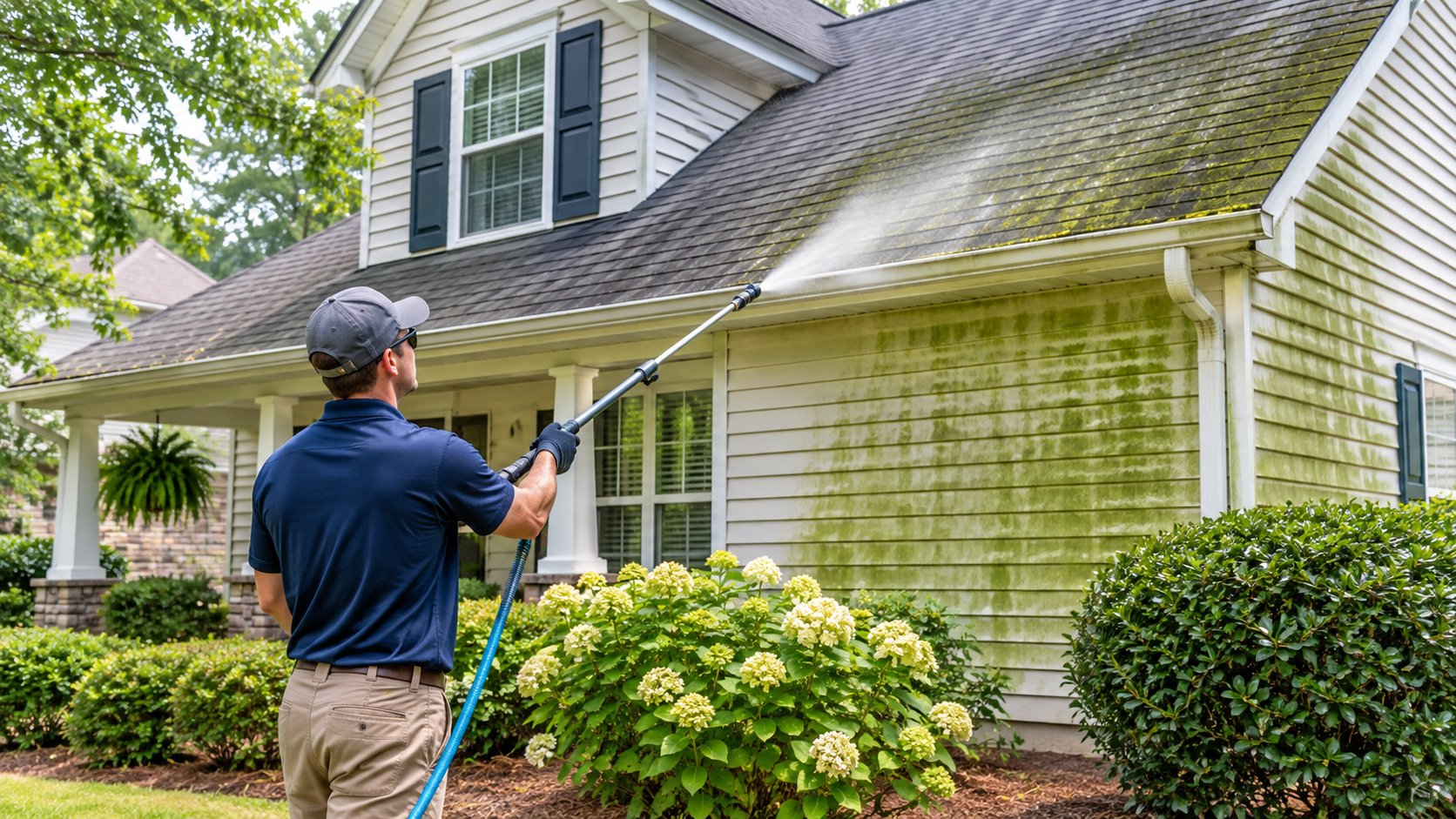
For example, those black streaks on an Alabama roof may look like ordinary dirt. However, they are often associated with a type of cyanobacteria known as Gloeocapsa magma.
Simply blasting the streaks with high-pressure water can damage the roofing material.
An appropriate low-pressure roof treatment addresses the biological buildup without relying on abrasive water force.
Important: Soft washing still requires careful chemical selection, dilution, application, runoff control, and protection of nearby plants. Low pressure alone does not make every cleaning treatment safe for every surface.
Pressure Washing vs. Soft Washing: Key Differences
Although both methods are used for exterior cleaning, they serve different purposes.
Feature | Pressure Washing | Soft Washing |
Water pressure | Higher, controlled pressure | Low pressure |
Main cleaning action | Water force | Cleaning solutions and gentle rinsing |
Best applications | Concrete and suitable hard surfaces | Roofs, siding, and delicate materials |
Organic growth removal | Can remove visible buildup | Treats organic growth with appropriate solutions |
Surface damage risk | Higher on delicate materials | Generally lower mechanical risk |
Cleaning solutions | Optional, depending on the job | Usually an essential part of the process |
Neither method is automatically better in every situation.
The right choice depends on the surface material, its condition, the type of buildup, and the manufacturer's cleaning recommendations.
Why Alabama's Climate Makes Exterior Cleaning Important
Homes in Tuscaloosa, Northport, Birmingham, and other parts of Alabama face conditions that can make exterior maintenance challenging.
The combination of humidity, rainfall, shade, and seasonal pollen creates an environment where dirt and biological buildup can accumulate.
Humidity encourages algae and mildew growth
Have you noticed green discoloration appearing on the shaded side of your house?
Areas that receive limited sunlight often remain damp longer after rainfall.
That moisture can encourage algae and mildew to develop on siding, fences, and other exterior surfaces.
Soft washing can be particularly useful when the main problem is organic growth rather than stubborn surface dirt.
Seasonal pollen collects on exterior surfaces
Spring in Alabama often brings noticeable pollen buildup.
Yellow pollen can settle on siding, porches, windowsills, and outdoor furniture.
When mixed with dust and moisture, it can leave surfaces looking dull or dirty.
Routine exterior cleaning helps remove accumulated pollen and grime before the buildup becomes more difficult to manage.
Red clay creates stubborn stains
Alabama's red clay soil is another familiar challenge.
After heavy rain, soil can splash onto driveways, walkways, foundations, and lower sections of siding.
These stains may require a combination of suitable cleaning products and controlled pressure, depending on the material.
The key is to identify the stain before choosing a cleaning method.
Which Cleaning Method Is Best for Different Parts of Your Home?
Different areas of a house have different cleaning requirements.
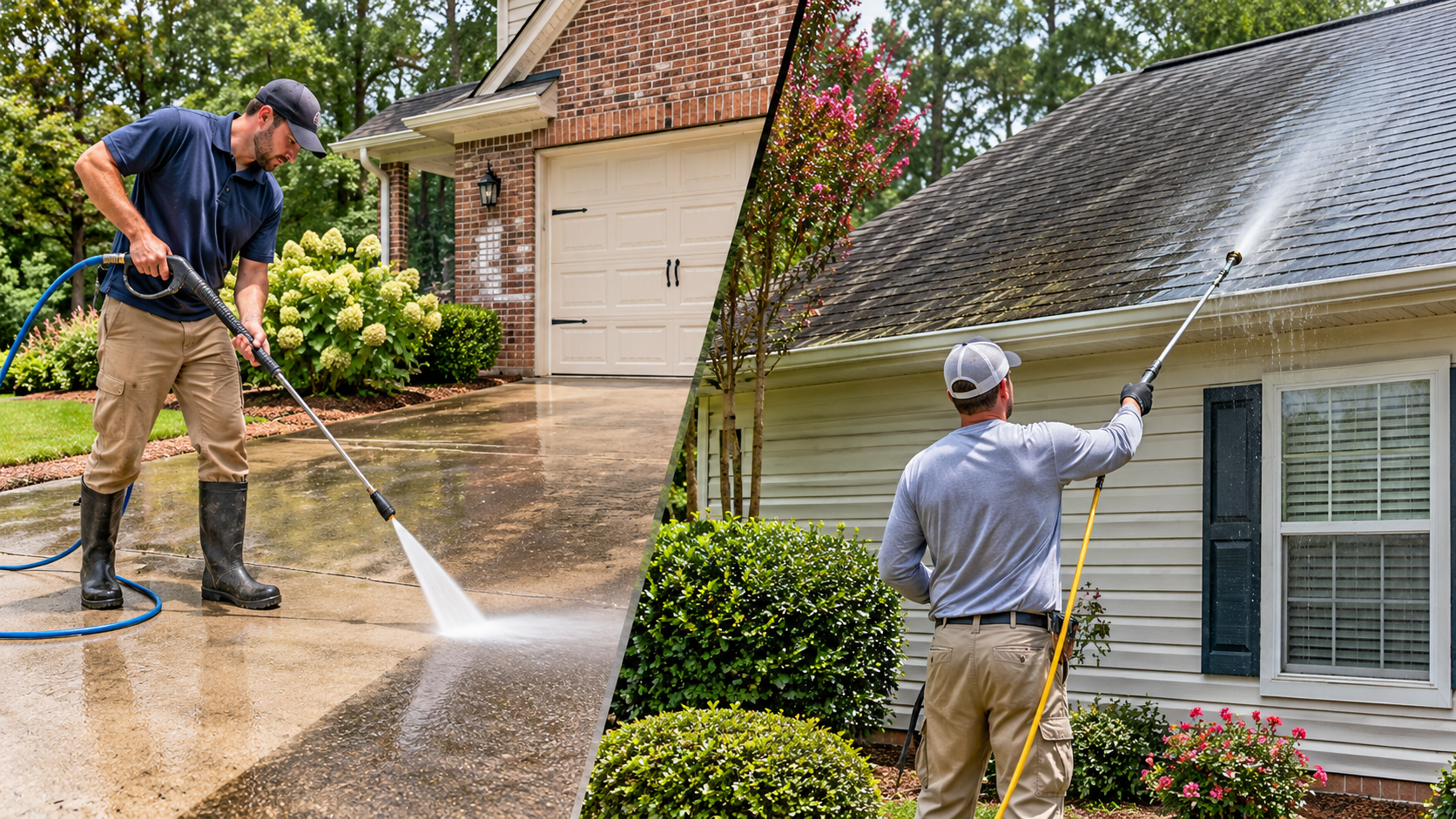
1. Roof shingles: Soft washing
For asphalt shingle roofs, high-pressure washing is generally not recommended.
Strong water pressure can loosen protective granules, disturb shingles, and force moisture into vulnerable areas.
A roof-appropriate low-pressure treatment is typically the better option for addressing algae and dark streaks.
Learn more about professional roof cleaning in Tuscaloosa, AL.
2. Vinyl siding: Soft washing
Vinyl siding can accumulate dirt, pollen, algae, and mildew over time.
Although vinyl is designed to withstand outdoor weather, concentrated water pressure can force moisture behind siding panels or damage loose and aging sections.
Soft washing provides a gentler approach when performed with compatible cleaning products and proper rinsing.
For homeowners noticing green buildup or streaking, professional house washing services can help restore a cleaner exterior.
3. Concrete driveways: Pressure washing
Concrete is generally more suitable for pressure washing than roofing or siding.
Professional equipment can help remove embedded dirt, mud, tire marks, and certain surface stains.
However, excessive pressure can still etch concrete, especially if it is relatively new, weakened, or previously damaged.
The goal is to use enough cleaning force to remove buildup without unnecessarily wearing the surface.
Explore pressure washing services in Tuscaloosa.
4. Wooden decks and fences: Surface-dependent cleaning
Wood requires special care.
Using excessive pressure can raise the grain, splinter the surface, and leave visible cleaning marks.
Low-pressure cleaning with wood-compatible products is often preferable, although the appropriate method depends on the wood species, finish, and condition.
5. Brick and masonry: Depends on the material
Not all brick surfaces are equally durable.
Modern, sound masonry may tolerate carefully controlled pressure washing, while older brick, weakened mortar, and certain decorative finishes require gentler methods.
A professional should assess the surface before selecting equipment or cleaning solutions.
Can Pressure Washing Damage Your Home?
Yes. Pressure washing can damage exterior materials when the wrong pressure, nozzle, technique, or cleaning distance is used.
Some potential problems include:
Water entering behind siding
Paint peeling or chipping
Wood fibers becoming damaged
Roof shingles losing protective granules
Mortar deterioration
Etching on concrete and masonry
These problems are not inevitable. They are often associated with inappropriate equipment settings or cleaning methods.
A professional exterior cleaner should evaluate the surface before beginning work.
For delicate materials, a low-pressure approach may be the safer choice.
Does Soft Washing Keep Surfaces Cleaner Longer?
Soft washing can provide longer-lasting results when the primary problem is algae, mildew, or similar organic buildup.
That's because suitable cleaning solutions address the biological contamination rather than relying solely on water force to remove visible discoloration.
However, no cleaning method permanently prevents algae or mildew from returning.
The time between cleanings depends on several factors, including:
Shade and tree coverage
Rainfall and humidity
Surface material
Drainage conditions
Nearby vegetation
The type and severity of contamination
A home surrounded by mature trees may develop new growth sooner than a similar property exposed to more sunlight.
Regular inspections are more useful than assuming every house needs the same cleaning schedule.
How Often Should Alabama Homeowners Clean Their Exteriors?
There isn't a universal schedule that works for every property.
For many homeowners, an annual exterior inspection is a practical starting point.
Look for visible signs such as green algae on siding, dark roof streaks, accumulated pollen, slippery walkways, or heavy staining.
Properties with significant shade, poor drainage, or persistent moisture may require more frequent attention.
Rather than cleaning aggressively on a fixed schedule, focus on the condition of each surface and choose the least damaging effective method.
Should You Pressure Wash Your House Yourself?
DIY pressure washing may seem straightforward, especially when dealing with a small concrete walkway.
However, exterior cleaning involves more than spraying water.
Homeowners need to consider equipment settings, electrical fixtures, nearby windows, surface conditions, chemical compatibility, and runoff.
Roof cleaning introduces additional hazards, including falls and potential damage to roofing materials.
Never mix cleaning chemicals, and avoid directing pressurized water toward electrical outlets, damaged siding, or roofing components.
For elevated surfaces, extensive organic growth, or delicate building materials, professional cleaning is generally the safer option.
Professional Pressure Washing and Soft Washing in Tuscaloosa, AL
Every home has different exterior cleaning needs.
A concrete driveway covered in dirt requires a different approach from an asphalt roof with black streaks or vinyl siding with green algae.
That's why selecting the appropriate method is more important than simply using the strongest equipment available.
At Alabama Pro Wash, the team provides residential exterior cleaning services throughout Tuscaloosa, Northport, Bessemer, and surrounding West Alabama communities.
The company uses soft washing for suitable delicate surfaces and controlled pressure washing for appropriate hard surfaces.
Whether you're maintaining your home's siding, removing roof discoloration, or cleaning a weathered driveway, choosing the correct cleaning process helps protect the materials you're trying to maintain.
Learn more about residential pressure washing and exterior cleaning.
Frequently Asked Questions About Pressure Washing vs. Soft Washing
1. Is soft washing better than pressure washing for houses?
Soft washing is generally preferable for delicate exterior surfaces such as asphalt shingles, painted siding, and many vinyl siding applications. Pressure washing is more appropriate for suitable durable surfaces, including concrete driveways and sidewalks. The best method depends on the material and its condition.
2. Can you soft wash a roof in Alabama?
Yes. Soft washing is commonly used to remove algae and dark streaks from Alabama roofs. Asphalt shingles should be cleaned using methods and solutions compatible with the roofing manufacturer's recommendations. High-pressure washing should generally be avoided.
3. Does soft washing remove mold and algae?
Appropriate soft washing solutions can remove or treat algae, mildew, and certain other biological contaminants on exterior surfaces. Effectiveness depends on the organism, surface material, product, and application method. Exterior cleaning should not be considered a substitute for professional remediation of mold inside a building.
4. Is pressure washing safe for concrete driveways?
Pressure washing is generally suitable for sound, properly cured concrete when the operator uses appropriate pressure and equipment. Excessive pressure can still cause surface etching or damage. Older, decorative, sealed, or deteriorating concrete may require a gentler approach.
5. What is the best way to clean a house exterior in Tuscaloosa, AL?
The best approach is to match the cleaning method to the surface and contamination. Soft washing is commonly used for siding and roof algae, while controlled pressure washing works well on suitable concrete surfaces. Alabama's humidity and rainfall make periodic exterior inspections especially useful.
Final Thoughts: Choose the Right Method for Your Alabama Home
When comparing pressure washing vs. soft washing, remember that more pressure doesn't necessarily mean better cleaning.
Pressure washing is effective for many durable outdoor surfaces. Soft washing provides a gentler alternative for roofs, siding, and other materials that can be damaged by concentrated water force.
For Alabama homeowners, understanding the difference can help prevent avoidable damage and make exterior maintenance more effective.
Ready to give your home's exterior the attention it needs?
Contact Alabama Pro Wash to learn more about professional pressure washing, roof cleaning, and soft washing services in Tuscaloosa and surrounding communities.
Keep your home looking its best with a cleaning method suited to every surface.

